Cambium
The layer that makes new tissue.
Regenerative medicine at Aristion: cell and gene therapy, restoration of tissue cancer treatment has damaged, and the science of biological ageing. Measured against a baseline. Recorded for years. Reported whether the result is good or not.
- Opens with
- Restore, for people finishing treatment here
- Works with
- Telomera Longevium XII and Samhita
- Flagship study
- Prime-1 — the beam that primes the cell
- The rule
- Nothing unproven is ever sold
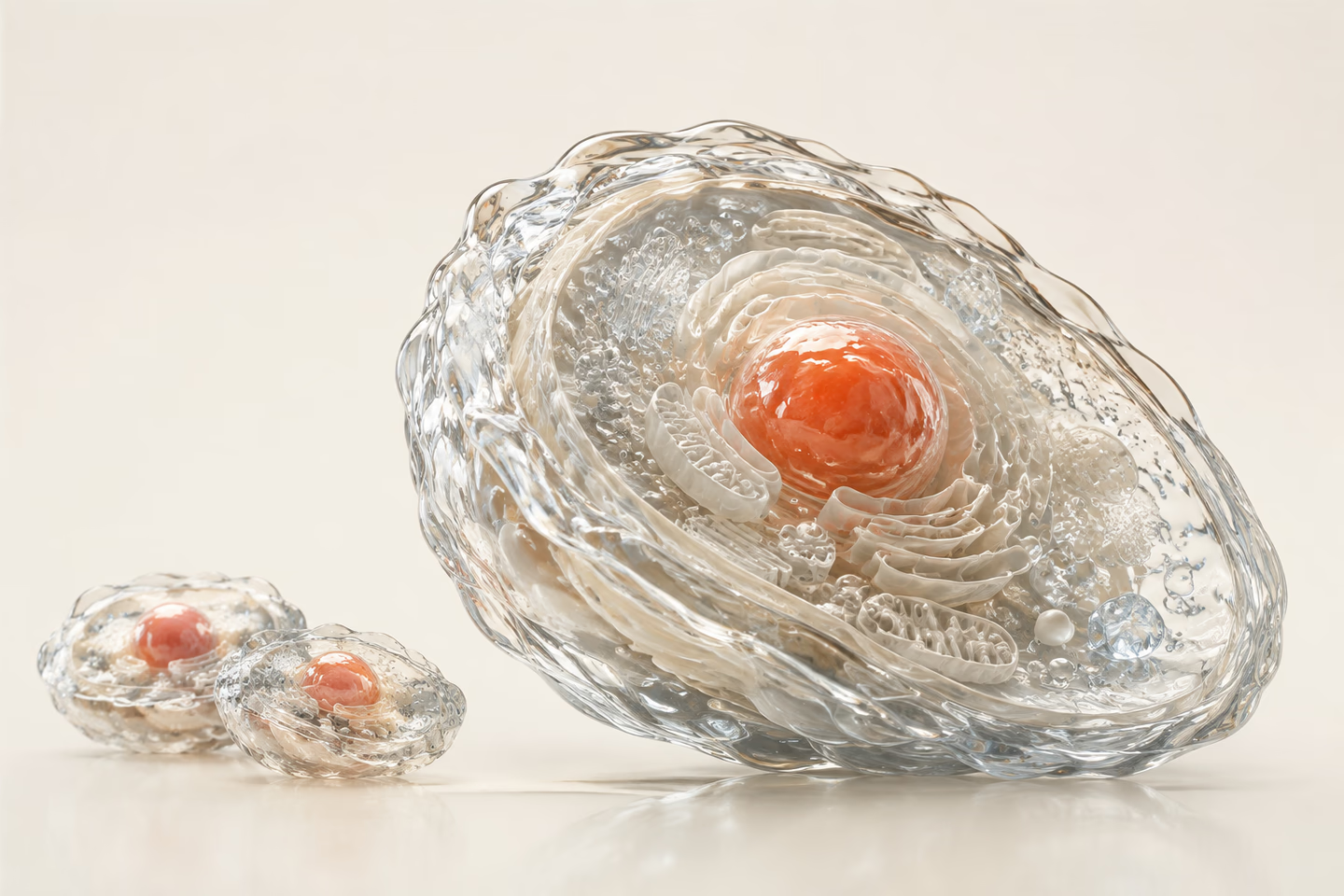
In a tree, one layer of cells makes everything. It is called the cambium.
It is a single cell thick. Every ring and every millimetre of girth is laid down by that one living layer. We chose the name for what it makes — and for the two directions in which it works.
Inward. Repair what has already happened.
The cambium lays wood inward: the structure that has to hold. Here, that means rebuilding tissue cancer treatment has damaged — skin in the radiation field, fibrosis, scars, hair, lymphoedema, mucosa and nerve. It is unglamorous. It is owed.
Outward. Make room for new growth.
The cambium lays bark outward: the new, living, exposed layer. Here, that means cell and gene therapy, epigenetic research, and the studies that will decide what regenerative medicine becomes. New growth is earned only after repair can be measured.
A cancer hospital is the right place to build this.
Most regenerative clinics compete for the healthy person who wants to feel younger. Aristion begins with the people whose tissue oncology has already changed.
- 01
The patientsThe people who need tissue rebuilt are already ours
If treatment causes damage, the institution should own the repair.
Radiation fibrosis. Chronic dermatitis in the treated field. Alopecia after cranial fields and chemotherapy. Lymphoedema. Xerostomia and swallowing loss. Vaginal stenosis after pelvic radiotherapy. Peripheral neuropathy. Reconstruction beds that will not heal. These are not cosmetic footnotes. They are clinical work.
- 02
The instrumentsImaging, sequencing, clocks and a longitudinal biobank
Regeneration is worthless if it cannot be measured.
The programme is designed around repeatable instruments: high-frequency ultrasound and optical coherence tomography for tissue, quantitative radiomics, biological-age measures, immune-repertoire sequencing and matched samples held across years. A result must be stated against a baseline — including when nothing changed.
- 03
The adjacencyThe beam and the cell on one campus and one record
Radiation and cell therapy belong in the same corridor.
Radiation can alter the immune environment of a tumour. Engineered cell therapies need a route into solid tumours. Bringing imaging, proton therapy, immune monitoring and cell-therapy capability together creates a research position that is difficult to reproduce across separate institutions and separate consent systems.
Four arms. One record.
The short proposition is always visible. Open only the arm whose clinical or research detail you need.
Arm oneCambium Living — cell and gene therapyBegin as a qualified treatment centre. Become a disciplined trial site. Build now for what replaces today’s cell therapies.
As a treatment centre
The opening ambition is to qualify for Indian-approved CD19 CAR-T products, including NexCAR19 and Qartemi, with the apheresis, cryogenic chain, intensive-care pathway and trained team that safe delivery requires. It does not require pretending to be a factory.
As a trial site
Multi-antigen constructs, off-the-shelf allogeneic products, and engineered natural-killer or macrophage programmes need sites with deep imaging, disciplined follow-up and immune monitoring. Those capabilities are part of the campus plan.
As a frontier site
In-vivo approaches aim to deliver a receptor’s genetic instructions directly to a patient’s own immune cells. They remain investigational. The programme is designed to be ready for credible protocols, not to market them early.
Arm twoCambium Skin — tissue restorationTwo doors into one laboratory. Restoration belongs to people finishing treatment here. Evidence-led elective work supports the service without defining it.
Restoration
A post-treatment service for skin and soft tissue: radiation dermatitis and fibrosis, scar and graft-bed quality, scalp and eyebrow restoration, reconstruction preparation, genitourinary recovery after pelvic radiotherapy, and nail and hand recovery.
Elective work, on a ladder
Autologous platelet preparations, polynucleotide-class biostimulation, licensed devices and collagen biostimulators may be considered only within their evidence and indication. The list stays deliberately short.
Where exosomes sit
Not on a price list. Exosome and secretome preparations remain investigational for these uses. They enter through a protocol, an ethics committee, an endpoint and a consent form — or they do not enter.
Why skin is the research organ
Skin can be sampled repeatedly and measured on the same person over time. That makes it a credible organ for studying age-associated change and future partial-reprogramming approaches without turning early science into a commercial promise.
Arm three · with Telomera Longevium XIICambium × Telomera — the biology of ageingTelomera measures ageing. Cambium may intervene in it. Keeping those responsibilities separate is the discipline.
Telomera holds the instruments
Methylation and organ-specific measures, cardiopulmonary fitness, body composition, immune ageing and imaging set the baseline and repeat it. The team that measures does not sell the intervention.
Cambium holds the interventions
Metabolic and hormonal correction, muscle and mitochondrial programmes, and carefully governed autologous biologics sit apart from investigational work such as senolytics, plasma exchange and partial reprogramming.
The rule between them
A member is told which rung of the evidence ladder an intervention occupies before cost is discussed. If repeat measurement does not support continuation, the programme stops.
Arm four · within SamhitaRings — the regeneration recordEvery intervention is paired with the biology before it and the biology after it. A permanent record matters more than any single treatment on this page.
Matched biology
Biological age, immune repertoire, transcriptional programme, imaging phenotype, tissue measurement and clinical outcome are recorded on either side of an intervention wherever the protocol allows.
Owned consent
The record sits under a separate, revocable Samhita consent. Being treated at Aristion is never automatic permission to bank, sequence or study a person.
The long asset
A longitudinal set of indexed interventions in people cared for continuously can answer questions that a one-off treatment photograph cannot. Null results are held with the same weight as positive ones.
The evidence comes before the price.
Regenerative medicine loses credibility when proven and unproven interventions appear on the same menu in the same type. Cambium publishes the rung, states it in the consultation and applies it to itself.
- 01
Approved
Regulator-cleared or established standard of care
Approved cellular therapies within their licensed indications; autologous platelet-rich plasma; licensed collagen biostimulators and energy devices; metabolic or hormonal treatment within approved indications.
May be offered only after the programme and clinical pathway are commissioned. - 02
Well-evidenced
Multiple studies and an established safety frame
Selected polynucleotide-class skin biostimulation; structured autologous fat procedures within surgical rules; exercise, nutrition and sleep programmes with hard endpoints.
The evidence and uncertainty are stated in writing. - 03
Investigational
Promising, unapproved, study only
Exosome and secretome preparations; senolytics; plasma exchange for ageing endpoints; partial epigenetic reprogramming; next-generation and in-vivo engineered cell therapies.
Ethics review, a defined endpoint, a stopping rule and a published result. Never sold as a service. - 04
Not offered
However often it is requested
Unregulated stem-cell infusions for unapproved indications; gene therapy for ageing outside a trial; any therapy supported only by the seller’s testimonial; unregistered imported biologics used as stock.
Declining these is part of the programme.
Prime-1 — the beam that primes the cell.
If one campus holds a proton gantry and a cell-therapy suite, it should ask the study question that needs both.
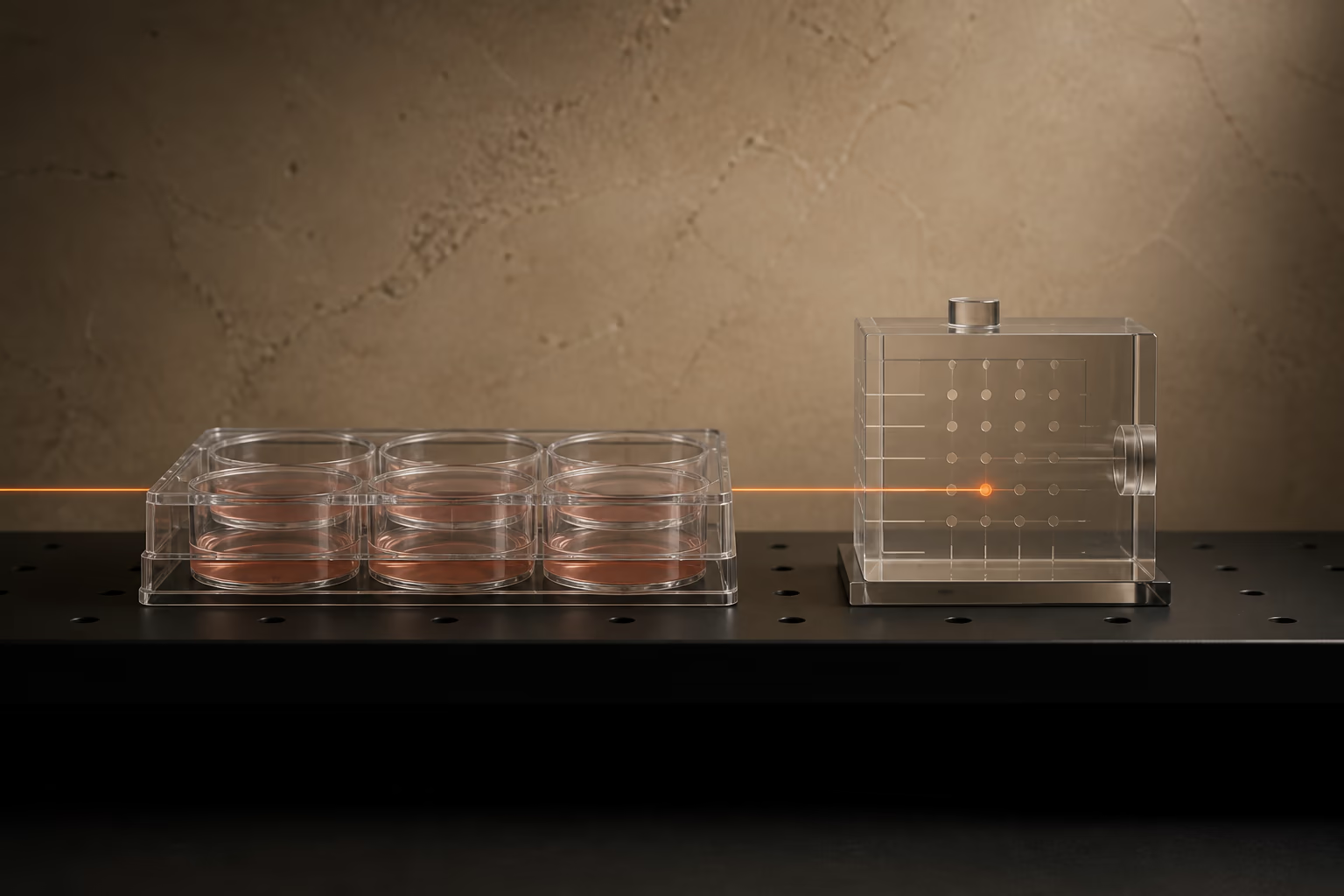
Engineered cell therapy transformed some blood cancers and has struggled in solid tumours. Radiation can release antigen and change the tumour environment. Proton therapy adds a precise physical property: the dose stops. Prime-1 is the study programme for testing whether a deliberately primed lesion admits engineered cells while protecting the rest of the immune system as far as the protocol allows.
The study
A short, low-dose proton course to one index lesion, followed by an engineered cell product on a defined schedule. The primary questions would be safety and whether engineered cells enter the primed lesion. Secondary work would examine the unirradiated lesion, immune repertoire and the imaging signature associated with response.
A future version may combine proton priming with in-vivo delivery of receptor instructions. This is a research question for the next five years.
Three pathways. One consent standard.
One pathway is an obligation. One is measured membership work. One is not for sale.
01Restore
For people finishing cancer treatment here
The repair programme for what treatment left behind, beginning with a baseline at treatment end and repeat measurement across twelve months.
- Skin, fibrosis, function and imaging measured at treatment end
- Tissue, scar, lymphoedema, mucosal and hair restoration as clinically indicated
- Reviewed by the same oncology team responsible for treatment
- Repeated measures written into the person’s record
Intended to be included in the treatment pathway. Final scope and funding require approval.
02Renew
For Telomera and ViVa members
Elective regeneration confined to the top two rungs, prescribed against a Telomera baseline and measured again rather than sold by the injection.
- Annual regenerative assessment
- A written plan naming the evidence rung for every item
- Only approved or well-evidenced interventions
- Repeat measurement, including the measures that did not move
An annual layer on Telomera. Ask us about membership options.
03Reprogramme
By invitation of the review board
The investigational tier. Entry depends on an open protocol and eligibility; it cannot be bought at any price.
- Ethics-approved protocols only
- A defined endpoint, duration and stopping rule before entry
- Separate consent for matched banking into Rings
- Results reported whether favourable or not
No fee for an investigational component. Study economics sit with a sponsor or grant, never the participant.
What a ring holds.
Each entry is a matched pair: the biology before an intervention and the biology after it, on the same instruments, in the same person.
- Biological age
- Repeatable methylation and organ-specific measures, run consistently so the numbers can be compared.
- Tissue
- Dermal thickness, collagen density, fibrosis and other tissue measures scored rather than described.
- Immunity
- Immune-repertoire sequencing and ageing panels where the protocol and consent support them.
- Imaging
- Quantitative features from clinically indicated scans, using consistent acquisition and analysis.
- Outcome
- Function, symptom burden and the participant’s own report captured as measures rather than testimonials.
- The null result
- Interventions that changed nothing remain in the record with the same weight as those that worked.
Asked and answered before you have to ask.
How evidence, safety and clinical judgement guide Cambium.
Is this a longevity clinic?
No. Cambium brings together a hospital programme with a research arm inside an oncology campus. A substantial part of its purpose is repairing damage caused by cancer treatment. Elective work, if approved, stays short and confined to the top two rungs of the evidence ladder.
Can I pay for stem cells or exosomes here?
No. Cambium will not charge for an unproven intervention. If an approved protocol is open and a person is eligible, participation would require ethics-approved consent, a defined endpoint and no fee for the investigational component. If no protocol is open, the answer is to wait.
What does CAR-T involve?
A person’s T cells are collected, modified to recognise a target on their cancer and returned as a living drug. Approved products can be highly effective for specific blood cancers, but treatment can cause serious adverse effects and requires a qualified centre with intensive-care capability. Eligibility is always an individual clinical decision.
Can regenerative treatment be dangerous after cancer?
Yes. Anything that stimulates growth, signalling or blood-vessel formation has to be considered against a history of malignancy, and some people should not receive some interventions. That judgement belongs with an oncology team reviewing current disease status — not with a standalone aesthetic service.
Who decides what becomes investigational work?
A review board without a financial interest in the decision, working with the institutional ethics committee and the additional committees required for cell or stem-cell research. A patient request or a supplier offer is not a protocol.
Why should a research partner choose Bengaluru?
Because the campus is designed to keep treatment, imaging, genomics, tissue measurement and follow-up on one longitudinal record. The value is not simply running a study; it is being able to say what changed, in whom and for how long.
Four ways this goes wrong. Four rules that stop it.
- 01
No drift into a spa
Renew stays on the top two rungs. Anything else moves into a protocol or leaves.
- 02
No sale of hope
Nothing investigational carries a patient price. Vulnerability is never a business model.
- 03
No skipped regulator
Cell, gene and biological products follow the applicable Indian regulatory and ethics pathway.
- 04
No consent creep
Treatment is not permission to bank, sequence or study. Rings requires separate, revocable consent.
One layer. Two directions. A record that outlasts both.
Ask about the programme, a research collaboration or the Restore pathway. Please do not send medical records through this form.